Thursday, November 13, 2008

BLISTERS


You just couldn’t resist again. Those looked great with your new outfit, even if they didn’t feel so great on your feet. “There’ll stretch out,” you told yourself, and then patted yourself on the back for getting such a good deal. Unfortunately, you got more than you bargained for- namely, painful blisters to go with your new shoes.
Blisters are tender spots that fill up with fluid released by tiny blood vessels in an area where delicate skin tissue have been burned, pinched, or just plain irritated. Virtually everyone has experienced friction blisters, the kind caused by now, read on to find out how to take care of it.

TREATING YOUR BLISTER
A blister is your body’s way of telling you that the skin and tissues are being injured. So while you take steps to relieve the discomfort, you also need to protect the injured area.

18 WAYS TO TREAT-AND BEAT-THEM

MAKE A TENT
Instead of simply placing an adhesive bandage right on top of the blister, “tent” the bandage by bringing in its sides so the paddling in the middle of the bandage raise up a bit. This will not only protect the blister but allow air to circulate, which will aid in healing.

USE A DOUBLE-DUTY BANDAGE
Another type of bandage, available in pharmacies, contains a gel and antiseptic to cushion and “clean” the blister.

LET IT BREATHE
Some physicians believe that a blister should not be covered at all for maximum aeration. He even suggested slipping your shoe off while you sit at your desk at work in order to give your blister some air.

SMEAR ON AN OITMENT
Whether you decided to cover your blister or not, you should apply an antibacterial/antibiotic ointment to it. Doctors generally recommended Bacitracin or Polysporin, which may be less likely to cause an allergic reaction or sensitivity than other over the counter ointments.

PAD IT
When a blister is in a particularly annoying spot, like the bottom of the foot, padding might provide more of the cushion than just a bandage would. She suggests using the circular pads made of foam adhesive found in the foot-care aisle of drug-and beauty-aid stores. Pharmacies also carry sheets of padding that you can cut to size for more exact fit. Cut the padding in the shape of a donut, and place it on the skin surrounding the blister so that the blister fits in the hole in the opening of the donut. Then gently cover the blisters with an antibacterial ointment and bandage.

PUT IT UP
Elevating the blistered area can help relieve the pressure.

BE PATIENT
Expect it to take about a week to ten days for the blisters fluid to be reabsorbed by the body.

DRAIN IT
While some doctors believe that a blister should never be popped because of the risk of infection, most agree that a blister causing extreme pressure- such as one on a finger or toe or under a nail-is a candidate for draining.

KEEP THE ROOF ON IT
Once you have popped the blister and drained the fluid, do not remove the deflated top skin. This skin, called the blister’s roof, protects the blister from infection and forms a bridge for new cells to migrate across on their journey to heal the site.

SOAK FIRST
To drain a blister on a tough-skinned area, such as the sole of the foot. first soaking the blister in Burrow’s solution, available from pharmacies in package or tablet (follow the direction on the package). Soaking the blisters for 15 minutes, three to four times a day, A day or two of this soften the blister and make draining easier.

WATCH FOR SIGNS OF INFFECTION
Redness, red streaks, or pus in an intact or a “popped” blister should be treated by a doctor.


PREVENTING BLISTERS

BUY SHOES IN THE AFTERNOON
“Over the course of the day, your feet may swell by as much as half a shoe size”. When trying on the shoes, wear the same type of socks that you plan to use with the shoes.

LOOK FOR LEATHER
Unlike nonporous vinyl and plastic materials, leather has microscopic pores that allow air to circulate, keeping the foot drier. In the same way, so do the clusters of perforated holes primarily found on many styles of sports footwear. A dry foot is less likely to develop blisters.

NEVER WEAR WET SHOES
The wetness can cause more “dragging” between the foot and shoe and can result in blisters. If you jog twice a day, for instance, you may want to buy a second pair of running shoes for your second run each day.

PROTECT “HOT SPOTS”
If you have a chronic ”hot spot” or place where blisters tend to develop, apply petroleum jelly to it, then slip on your sock. Foam or felt pads, used alone, can also absorb the friction and protect a hot spot. For best result, make sure the padding covers more area than you think a blister would take up, since the neighboring area can become irritated, too.

WEAR THE RIGHT SOCKS
Specially made sport socks with extra padding in hot spots can help prevent blisters. Natural fibers such as cotton and wool tent to keep the feet dry by absorbing moisture.

TRY A SPRINKLE
Foot powders may aid in keeping the foot dry and preventing painful blisters from forming.

Wednesday, November 12, 2008

BLADDER INFECTION


You have to go and you have to grow now. Come to think of it, it seems like you’ve had to go every 15 minutes since you woke up this morning. And each time, it’s been the same story. Not much comes out, but it burns like crazy. What in the world is going on?
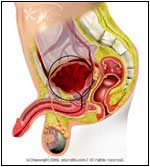
If you have pain or burning on urination, the frequent urge to urinate, and/or blood in your urine, chances are you have a bladder infection ( also called cystitis, urinary tract infection, or UTI). These symptoms may also be accompanied by lower abdominal pain, fever and chills, and an all-over ill feeling.
Bladder infections are caused by a bacterial invasion of the bladder and urinary tract. The urine in the bladder is normally sterile.
If you’re a woman who suffers from bladder infections, you’re not alone. Woman tent to suffer more bladder infection than men because the female urethra, the tube leading from the bladder to the outside of the body, is only about one-and a-half inches long-a short distance for bacteria to travel.
Women also suffer more bladder infections because sexual intercourse can irritate the urethra and contribute to the transport of bacteria from the anal area and vaginal into the bladder.
Pregnant women are also more likely to suffer from bladder infections. The changing hormones of pregnancy and the pressure exerted by the enlarge uterus on the bladder and ureters (the two tubes that carry urine from the kidneys to the bladder) put pregnant women at greater risk.
Men can also suffer from this malady. In men, bladder infection are almost always secondary to an infection of the prostate glands.
Impotence Center in Poland. “Primary infection of the bladder in men just doesn’t happen, because the bladder is well protected. In men, prostate infection usually feels like “you’re sitting on a brisks. When the infection extends to the bladder, the symptoms of irritation, urination join the achy-bottom feeling.

LOAD UP ON FLUIDS.
At the first sign of bladder infection, start drinking water and don’t stop. During the first 24 hours,drinking at least one eight-ounce glass of water every hour. People who suffer from recurrent bladder infection usually don’t drink enough liquids. So even when you don’t have an active infection, you should make a habit of drinking eight tall glasses of water everyday. Drinking lots of fluids not only dilutes the urine, giving bacteria less to feed on, it also has a washout effect on bacteria.

HAVE A CRANBERRY COCKTAIL.
If you’ve never developed a taste for the sweet tanginess of cranberry juice, now’s the time. Cranberry juice (without added sugar) may make urine more acidic and less hospitable for bacterial growth. Drinking cranberry juice is also a way to increase your fluid intake.

GO, GO, GO.
Many people don’t urinate when they first get the urge because its inconvenient or there isn’t the time or place. Take a guy who gets off work, has a couple of cups of coffee or a couple of beers, and gets on the freeway in rush hour traffic. He feels the urge to urinate, but he can’t get off the freeway. When he finally gets home and urinate, it’s difficult and it burns. By the next day, he’s calling his doctor with a prostate infection.
Holding urine allows it to concentrate in the bladder, creating a perfect medium for bacterial growth. In older men, holding urine can cause congestion, inflammation and obstruction of the prostate and can eventually lead to a prostate infection or sometimes a bladder infection.

HEAT IT UP.
For lower abdominal pain, use a heating pad or hot-water bottle or take a hot bath. Heat not only relieves the symptoms, it also brings more blood with white blood products to the affected area.

TAKE A BATH.
If you have a lot of burning, a warm “sitz” bath ( sitting in three of four inches of water) can ease the pain.

TAKE A BREAK.
Rest in bed,especially if you have a fever. You’ll conserve energy and speed heating.

WEAR COTTON UNDERWEAR.
Cotton underwear, cottonlined panty hose, and loose clothing will allow the genital area to breathe and stay dry. For men, boxer-type shorts rather than jockey-style shorts are better if prostate and bladder infection are a problem.

AVOID ALCOHOL.
Alcohol is a urinary tract irritant for both men and women and should be avoided during infection.

TAKE A PAIN RELIEVER.
Bladder infection can be painful. Acetaminophen, ibuprofen or aspirin, especially if taken at bedtime, can ease the pain.

WASH UP, LOVERS.
Both partners should wash up before intercourse.

URINATE AFTER LOVEMAKING.
If you suffer from recurrent bladder infection, urinate immediately before and after intercourse. This can help flush out bacteria that may have entered the urinary tract.

SWITCH BIRTH-CONTROL METHODS.
Women who use a diaphragm and suffer from recurrent infections should try switching to condoms or a cervical cap. You may do better with a smaller diaphragm or a cervical cap.

KEEP A BLADDER-INFECTION DIARY.
If you suffer from recurrent bladder infections, keep a diary to discover what patterns precede an attack. Some people find that their infections are related to stress, menstruation, lovemaking or other factors. Once you discover what precipitates your infections, you can make changes to alter those patterns.

WIPE FROM FRONT TO BACK.
Most women wipe from back to front, which moves bacteria from the rectum dangerously close to the urethra.

USE CONDOMS.
Prostate infection, which can lead to bladder infection, is more common among men with multiple sex partner. Practice safe sex, and always use condoms with partners.

Thursday, November 6, 2008

BLACK EYE


This morning’s racquetball game was going so well-until your opponent hit that unbelievable shot that bounced off the wall and hit you right in the eye. After he finished apologizing profusely and the pain subside somewhat, you picked up your ego and went home. But now you’re beginning to resemble a prizefighter who lost the prize! Your eyelid is nearby swollen shut, the area around your eye is turning black and blue, and the throbbing pain is back in full force. You’re starting to wonder if there’s more to this injury than meets the eye.
A black eye is simply a hemorrhage around the eye. The blood underneath the skin comes through as a purplish color. While there are many disease and conditions that can cause black eye. If the swelling comes down rapidly and your vision is good, it is not likely that there is any serious damage to the eye.

PREVENTIVE MEASURES “6 CARE TIPS”

ICE THE AREA
This will reduce the swelling and numb some of the initial pain. Hold an ice or some ice cubes wrapped in a washcloth on the eye. Putting crushed ice in a plastic bag and placing the bag on the top of a cold washcloth over the eye also works well.

PACK IT IN POPCORN OR PEAS
A bag of frozen, unpopped popcorn kernels or frozen peas placed over a washcloth on the affected eye can also help cool the area and bring some relief.

CLEAN IT UP
Clean any small lacerations with mild soap and water. Then continue to keep them clean and dry. This will help to keep the area from becoming infected with bacteria. Sometimes the tissue around the eye can actually split because the soft tissue is being pushed against a hard surface of underlying bone. You can get a considerable hemorrhage from this, which can leave a bit of a lump afterward.

AVOID PRESSING ON THE EYE ITSELF
The area has already been traumatized enough, and pressing on it will only cause further trauma. So be gentle when you apply an ice pack or clean the area.

KEEP YOUR CHIN UP
Look and feel a little like Rocky Balboa. Be thankful you can see yourself in the mirror, and try to resign yourself to added color for a while. The discoloration tends to the last. It will lessen during that time, but it won’t fade completely for a couple of weeks or so.

WEAR GOGGLES
As a true with so many injuries, the best treatment is prevention. While you may not necessary like the way you look in goggles, wearing them can help you ensure that you’ll be able to see the way you look.
Any sport that involves close contact with other individuals and or the use of a small ball of some sort is likely to put you at risk for a black eye. The majority of black eyes we see are caused by the eye being hit by an elbow, hand, or knee or by an object small enough to fit inside the bony structure around the eye.

BITES


Bites can range from itchy to painful to life threatening. And you needn’t live out in the widerness to run the risk of getting one. In fact, one of the most dangerous kinds of bites can be inflicted in your very own home. Many bites can be treated at home, although others, like a human bite, require an immediate visit to the doctor or emergency room. The trick is distinguishing the dangerous from the benign.
The following is a guide to treating the most common types of bites, as well as a few tips on how to avoid getting bitten in the first place. Of course, if you have had a run with a creature that you suspect is dangerous, whether or not it is discussed here, don’t attempt self-treatment.

ICE AN ITCH.
Itchy mosquito bites may benefit from ice-cold compress. Ice decrease the inflammation and stops the pain and itching. icing the bite for 20 minutes at a time every few hours. The same goes for nonpoisonous spider bites, which can also leave an itchy welt.

TRY AN OLD FAIL-SAFE
When you had a mosquito bite as a child, your mother probably used calamine lotion- a thin, chalky, pink liquid-to stop the itch. Sold over the counter ( and quite economical, too, compared with alternatives such as hydrocortisone).

GIVE AN ANTIHISTAMINE A TRY.
Over the counter antihistamines can also help an itchy bite, since the itch is really a mild allergic reaction. Antihistamines should not be used by sensitive individual, pregnant women, people with allergies to ingredients in the products, or those who are taking conflicting medications. Check with your doctor or pharmacist if you are in doubts.

RECOGNIZE THE SIGN OF A SEVERE REACTION.
The bite from a venomous spider can cause a severe allergic reaction. It is important, therefore, to recognize the signs of an allergic reaction before it is too late. Symptoms of anaphylaxis, or severe allergic reaction, include difficulty breathing, hives all over the body, and loss of consciousness. Anyone experiencing these warning signals should be rushed to the nearest emergency room.

DON’T PANIC IF YOU’VE BEEN BITTEN BY A TICK.
Lyme disease, a tick-borne illness that can cause chills, fever, headache, and other complication, has received lots of play in the media of late. But not all ticks carrying tick will transmit it to you if you happen to be bitten. Generally, a tick must remain on the skin for 24 to 48 hours in order to transmit the organism that cause Lyme disease.

REMOVE TICKS WITH CARE.
To remove a tick from your skin, graps the insects mouthparts with tweezers as close as possible to your skin and slowly pull straight upward. Do not attempt to pull the ticks body or head, as it may break off, leaving the mouthparts underneath your skin.

STOP THE BLEEDING.
If an animal bite has caused severe bleeding, apply pressure ti the area with the palm of your hands. If the wound is large, tie a scarf, towel, or T-shirt tightly around the site to create pressure over a larger area.

DON’T TREAT A PUNCTURE LIKE A SCRATCH.
A bite that leaves a scratch but doesn’t really break the skin may simply be washed with soap and water, then covered with an antibacterial cream or ointment. Observe the animal carefully. With wild animals, if the animal is particularly placid- for example, if you can walk up to a squirrel and feed it-there’s something wrong with that animal its sick. Calling a doctor or veterinarian to find out if there have been any reported outbreaks of rabies in wild or domestic animals in your area.

GET A TETANUS BOOSTER.
If you’ve been bitten by a wild or domestic animal and the bite has broken the skin, its probably wise to contact your doctor to see if you need a tetatus booster shot ( whether or not you need one depends, in part, on the type of wound and the timing of your last tetanus shot.)

DON’T GET BITTEN IN THE FIRST PLACE.
Perharps the most sensible way to treat a bite is in advance – before you get bitten, stay away from wild animals, even if they let you approach, and don’t pester snakes, spiders, bees, or anything else that looks threatening.

KNOW YOUR LOCAL FAUNA.
Its best to keep abreast of the insects and animals in your area, so that you know what to watch out for. For example, you may live in an area where there has been an outbreak of rabies among domestic animals or a large number of lyme-carying ticks. You should know if rattlesnakes, poisonous spiders, or scorpions are likely to take up residence around your neighborhood. If you live in an area, such as the southwest, that is home to poisonous snakes and scorpion, learn how to recognize them by sight and avoid them like the plague.

Friday, October 31, 2008

BELCHING


In certain cultures, a belch after dinner is traditionally considered a compliment to the cook. In the Western world, if an adult belches after dinner- or at any time, for that matter-it is considered a breach of manners.
Babies burp, and it is certainly a satisfying sound to the mother or father who have been patting or rubbing the baby’s back. Children belch, too, because they think it’s a funny game, and sometimes the competition get noisily intense. Over the years, however, such child’s play can turn into a habit of frequently and unconsciously swallowing air- a habit that can result in belching.
If you suffer from aerophagia- the medical name for repetitive belching- you have probably endured the embarrassment of an unexpected outburst at precisely the most inelegant moment. But your habit can easily be broken if you just become aware of when and how you swallowed air and stop doing it.
HERE’S HOW:

STIFLE IT.” Chronic belchers may force themselves to belch because it provides temporary relief. A belching person can be seen forcing air into the mouth and esophagus. So if you’re a chronic belcher, you need to make conscious effort to squelch that belch.
DON’T SMOKE:
Here is yet another reason to give up smoking if you remain in the ever-dwindling population that still engages in the habit. “By
Inhaling on cigarettes, cigars, or pipes, you are swallowing excessive amounts of air- much more than the belch can let out”.
And if you are counting on chewing gum or sucking on hard candy to help you kick that habit , think again; these activities stimulate air swallowing, too.
MIND YOUR MANNERS:
Mom right again when she told you not to talk with your mouth full. “This habit allows air into the mouth, which is then swallowed
With the food.
EAT SLOWLY:
People who gulp down food and beverages are, for one thing, swallowing excessive amounts of air. They’re also crowding the
stomach with too much to digest, which causes a gaseous build-up. “Once you take a mouthful, put down your fork and chew your food well before taking another bite.”
RELAX:
Anxiety and stress can cause you to swallow more often, which increases the amount of air taken in. “You’ll have to make a conscious effort to minimize air swallowing even though you may feel that your mouth is dry, because you’ll only complicate your stress with stomach gas.”
DON’T CATCH COLD:
One sure thing about a cold is that it brings along postnasal drip, which will probably make you swallow much more frequently. so try to blow your nose to clear your nasal passages. Better yet, you should try to protect yourself from exposure to cold viruses.
AVOID BUBBLY BEVERAGES:
Drinking carbonated beverages, including beer, creates air in the stomach. “Stay away from these drinks,”
GO STRAWLESS:
Drinking through a straw will only increase the amount of air you swallow.

Thursday, October 30, 2008

BAD BREATH


Halitosis is better than no breath at all jokes one dentist. But the problem of halitosis, or bad breath, has plagued mankind for centuries, leaving few people laughing about it. To conquer bad breath, the ancient Greeks reputedly rinsed with white wine, anise seed, and myrrh, while the Italian mixed up a mouthwash of sage, cinnamon, juniper seeds, root of cypress, and rosemary leaves, according to the academy of General Dentistry.
Today, Americans spend more than half a billion dollars for mouthwashes that often contain little more than alcohol and flavoring. But people worry about their breath. Maybe one explanation is the simple fact that you can’t really tell whether you’ve got bad breath. This is a time when you have to depend on the honesty and kindness of friend to let know.
Occasionally, bad breath is due to something in the lungs or gastrointestinal tract or to a systemic condition. Eating a garlickly meal is one of the most common cause. The strong odor of foods like garlic, onions, and alcohol are carried through the bloodstream and exhaled by the lungs. Another big loser when it comes to turning your breath soar-and harming your health-is tobacco.

WHAT YOU CAN DO TO KEEP YOUR BREATH AS FRESH AS POSSIBLE:

Keep your mouth clean.
Food and bacteria trapped between teeth and at the gum line can only be removed with floss; if it’s left to linger, it’s not going to smell nice.
Clean your tongue, too.
Bacteria left on your tongue can certainly contribute to less-than-fresh breath, so be sure to brush your tongue after you’ve polished your pearly whites.
Wet your whistle.
A dry mouth can equal smelly breath. Saliva helps clean your mouth; it has a natural antibacterial action and it washes away food particles. Try chewing sugarless gum or sucking on sugarless mints to stimulate saliva production.
RINSE:
If nothing else, at least rinse your mouth with plain water after eating. Swishing the water around in your mouth may help to remove
Some food particles left in the mouth after meals.
MUNCH ON PARSELEY:
That green sprig of parsley that came with your meal can do more than decorate your plate. While munching on parsley or spearmint won’t cure bad breath, the scent of the herb itself can help temporarily cover up offending oral odor, (You’re basically
trading an offensive odor for a more acceptable one.)
EAT TO SMELL SWEET:
Foods that help fight plaque may also help fight mouth odor. Opt for celery, carrots, peanuts, or a bit of low-fat healthy diet will help your teeth as well.

Wednesday, October 29, 2008

BACK PAIN


Maybe you lifted something heavy or swung a golf club a little too enthusiastically. Or maybe you’ve been sitting in an uncomfortable desk chair for two weeks, sweating over a deadline. Whatever the reason, now you’ve flat on your back, wishing for something, anything that will put an end to the agony.
Almost every American suffer from back pain at some point in his or her life. The bad news is that unless you have a major injury or disc problem, your doctor may not be able to do much for you other than prescribe some pain medication and advice you to rest. The good news is that by following some simple steps, you can be on your feet again in just a few days.
YOU CAN AVOID HAVING TO ENDURE SIMILAR DISCOMFORT IN THE FUTURE.

EASING THE PAIN
The following remedies are appropriate for anyone who is suffering from back pain as a result of tight, acting muscles or a stain. However, if you are experiencing pain, weakness, or numbness in the legs or a loss of bowel or bladder control, see the doctor without delay.
GO TO BED
“Bed rest is a way of removing the stain from the muscles”. The back muscles job is to hold you erect. If you lie down, it takes the stress off of the muscles. The best way to lie is flat on your back with the pillow underneath your knees. Since this position forces you to twist your head to breathe and may cause neck pain.
ICE IT.
Applying an ice pack to the painful area within 24 hours of the injury can help keep inflammation and discomfort to a minimum.
Ice does one thing- it decreases the nerve’s ability to conduct a painful stimulus. Wrapping ice cubes in the plastic bag, then applying the bag on the top of a thin towel that has been placed on the skin. Leave the ice pack on for 20 minutes, take it off for 30 minutes, then replace it for another 20 minutes.
TAKE A HOT BATH.
If more than 24 hours have passed since the injury occurred, ice will not help reduce pain or inflammation. After that time, heat may help increase the elasticity of the muscles by about ten percent. Pregnant woman, however, should not sit in a hot bath for too long, since raising the body temperature over 100 degrees Fahrenheit for long periods may cause birth defects or miscarriage.
GET A MASSAGE.
If you’re lucky enough to have an accommodating spouse, friend, or roommate, ask him or her to give you a rubdown.” Lie face-down and have someone knead the muscles”. Local massage therapist may also make house calls.
RELAX.
Much back pains is the result of muscles made tight by emotional tension. Patients practice relaxation and deep-breathing exercises, such as closing their eyes, breathing deeply, and counting backward from 100.
TAKE TWO ASPIRIN.
Taking an over the counter analgesic such as aspirin, acetaminophen, or ibuprofen may help relieve your pain. However, be aware that not at all medications- not even nonprescription ones- are for everyone. Pregnant woman, for example, should not take any medication without first checking with their doctor. And people with ulcer should stay away from analgesics containing aspirin.

BACK-SAVING EXERCISES.

1. SINGLE KNEE-TO- CHEST:
Lie on your back with your knees bent and your feet on the floor. Grasp the back of one thigh with both hands; gently and slowly pull toward your chest until you
Feel mild tension ── not to the point of pain. Hold to the count of ten, without bouncing, then release. Repeat four to five times with the same leg, then switch sides. This exercise stretches muscles in the hips, buttocks, and lower back ── all muscles that become shortened and tight after a long day of sitting or standing. It
Is a good warm-up to the other exercises.
DOUBLE KNEE-TO CHEST:
Lie on your back with your knees bent and your feet on the floor. This time, grasp both thighs, and gently and slowly pull them as close to your chest as you can. Again ── pull only to the point of slight tension, and don’t bounce. Hold to the count of ten, then release. Repeat four to five times before proceeding to the next exercise.
LUMBAR ROTATION:
Lie on your back with your hips and knees bent, your feet flat on the floor, and your heels touching your buttocks. Keeping your knees together and your shoulders on the floor, slowly allow your knees to rotate to the right, until you reach a point of mild tension. Hold for a count of ten, then return to the starting position. Repeat four to five times on the right side, then switch to the left.
PARTIAL SIT-UP:
Lie on your back with your knees bent, your feet flat on the floor, and your hands gently supporting your head. Slowly curl up just to the point where your shoulders come off the floor. Avoid bending your neck. Hold for a few counts, then roll slowly back down. Remember to breathe as you do the exercise Repeat 10 to 15 times. This exercise strengthens the abdominal muscles; strong abdominal muscles help you maintain good posture and reduce the possibility of back injury.
ACTIVE BACK EXTENSION:
Lie on your chest on the floor. You can put a pillow under your stomach (not under your hips) if that feels comfortable. Put your arms at your sides, with your hands next to your buttocks. Slowly extend your head and neck and raise your upper body slowly off the the floor. Hold for five to ten counts. Slowly lower yourself back to the starting position. Remember to breathe as you do the exercise. Repeat five to ten times.
POSTURE ENHANCER:
Stand with the back of your head, your shoulders and shoulder blades, and your buttocks held firmly against a wall. Your heels should be about six inches away from the wall. Do not allow your lower back to curve excessively. Start with the back of your hands against the wall at thigh level. Slowly slide the backs of your hands up the wall, without allowing your elbows, head, heels, buttocks, or shoulder blades to lose contact with the wall. ) The movement is similar to making angels in the snow.) Stop at the point where your arms are so high that the above-mentioned body parts cannot stay against the wall. Repeat five times.
OFFICE EXERCISE:
If you spend many hours a day hunched over paperwork at a desk, chances are your lumbar, or lower, spine is being stretched and pulled in the wrong direction. (The lower spine’s natural curve is slightly inward, toward the abdomen. Hunching forward causes the lower spine to be curved outward, toward the chair.) Poor sitting posture puts stress on the ligaments and other tissues. To give your lower back a break, periodically get up to standing position, with your feet shoulder-width apart and your hands on your hips. Slowly lean back to a point of mild tension and hold for a count of ten. Repeat four to five times.
You should also practice getting out of your chair properly with your feet shoulder-width apart, your head up, your eyes focused straight ahead, and your buttocks stuck out. Use the strength of your arms, legs, and buttocks, instead of your back, to help you rise.